Plant Responses to Global Environmental Change in the Alpine: Sisi’s Keynote Address at GREEBS 2025
At this year’s Guild of Rocky Mountain Ecologists & Evolutionary Biologists (GREEBS) meeting, Dr. Sisimac Duchicela (INSTAAR / CU Boulder Geography) delivered a keynote address on “Plant Responses to Global Environmental Change in the Alpine.”
Her talk highlighted why alpine ecosystems are uniquely vulnerable to climate change and what her experiments reveal about how plants adapt—or fail to adapt—to new conditions.
Alpine Ecosystems on the Edge
Alpine environments are warming faster than many other systems, and their species are confined to narrow climate niches.
Even small shifts in temperature or precipitation can ripple through entire communities. Dr. Duchicela stressed that both broad-scale forces (warming, shifting snowpack) and local biotic interactions (competition, facilitation, community dynamics) determine how plants respond.
Experiments in the Andes
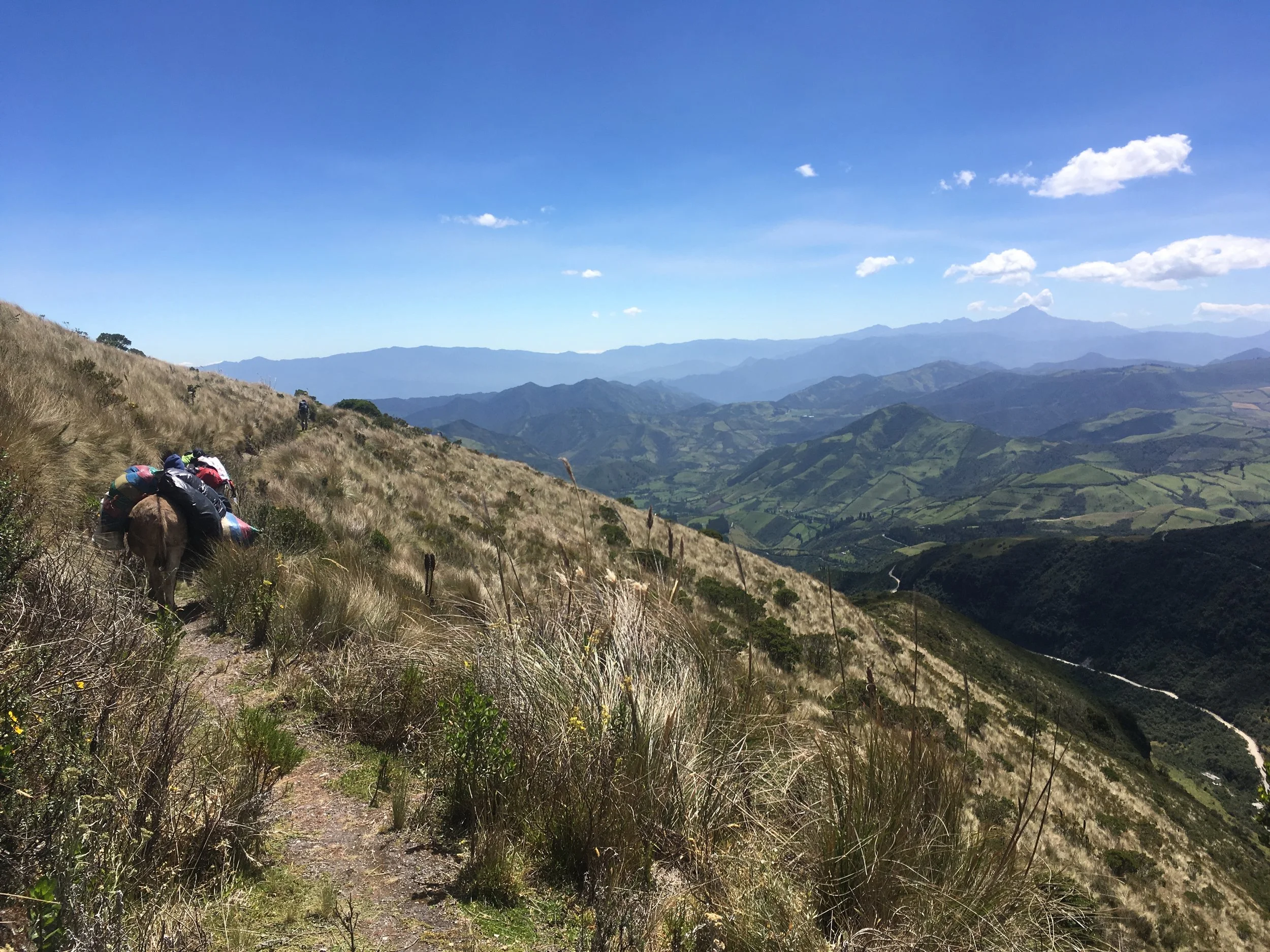
Drawing on years of research in the Ecuadorian Andes, Duchicela shared results from two climate-change simulation approaches:
Open-top chambers that passively warm plots in situ.
Turf transplants that move vegetation patches across elevations to mimic upslope shifts.
These methods reveal which species expand, which decline, and how community composition changes under warming. The findings suggest that warm-adapted plants often increase, while alpine specialists face displacement, and that community context strongly influences resilience.
Linking Ecology to Restoration and People
Beyond ecology, Duchicela emphasized the social and economic stakes of alpine change.
Mountain ecosystems provide water, grazing, and cultural services; when species and communities shift, so do these benefits. Restoration and adaptation, she argued, must weigh ecological realities alongside community needs, trade-offs, and Indigenous knowledge.
Looking Ahead
Her keynote pointed to several priorities for the field:
Comparative work between tropical and temperate alpine systems (Andes vs. Rockies).
Experiments that guide restoration ecology, identifying resilient species and strategies.
Partnerships with land managers and local communities to translate findings into practice.
Closing
Dr. Duchicela’s address underscored that alpine ecosystems are climate sentinels: the changes observed there offer early warnings of broader ecological upheaval. By combining experimental ecology with community collaboration, her work charts a path toward both understanding and action.